What Makes a Cinematic Portrait: Notes from a Former Video Editor
Before I picked up a still camera, I spent years editing video.
I cut wedding films. I cut corporate documentaries. I cut small ad campaigns. The work taught me something that most photographers never have to think about: how a scene is built.
A scene in film is built from light, motion, color, pacing, framing, and the small invisible choices the cinematographer made when she decided exactly where the camera should stand and how long the shot should breathe. None of that is decoration. All of it is in service of what the scene wants to say.
When I moved from cutting video to taking photographs, those instincts came with me. I do not think of a portrait session as photographing a person. I think of it as constructing a scene. The subject is the character. The light is the cinematography. The color tone is the grade. The pose is the line of action. The framing is the cut.
This post is for women planning a studio session in Connecticut who want to understand what their photographer is actually doing when she sets a frame. And for photographers who have wondered why their work feels documentary rather than cinematic and want a different way in.
Light That Resembles Cinematography
The single biggest difference between a snapshot and a cinematic portrait is the light.
A snapshot uses ambient light flatly. The light is everywhere, fills everything, leaves no shape. Result: a documented person. Accurate, but emotionally inert.
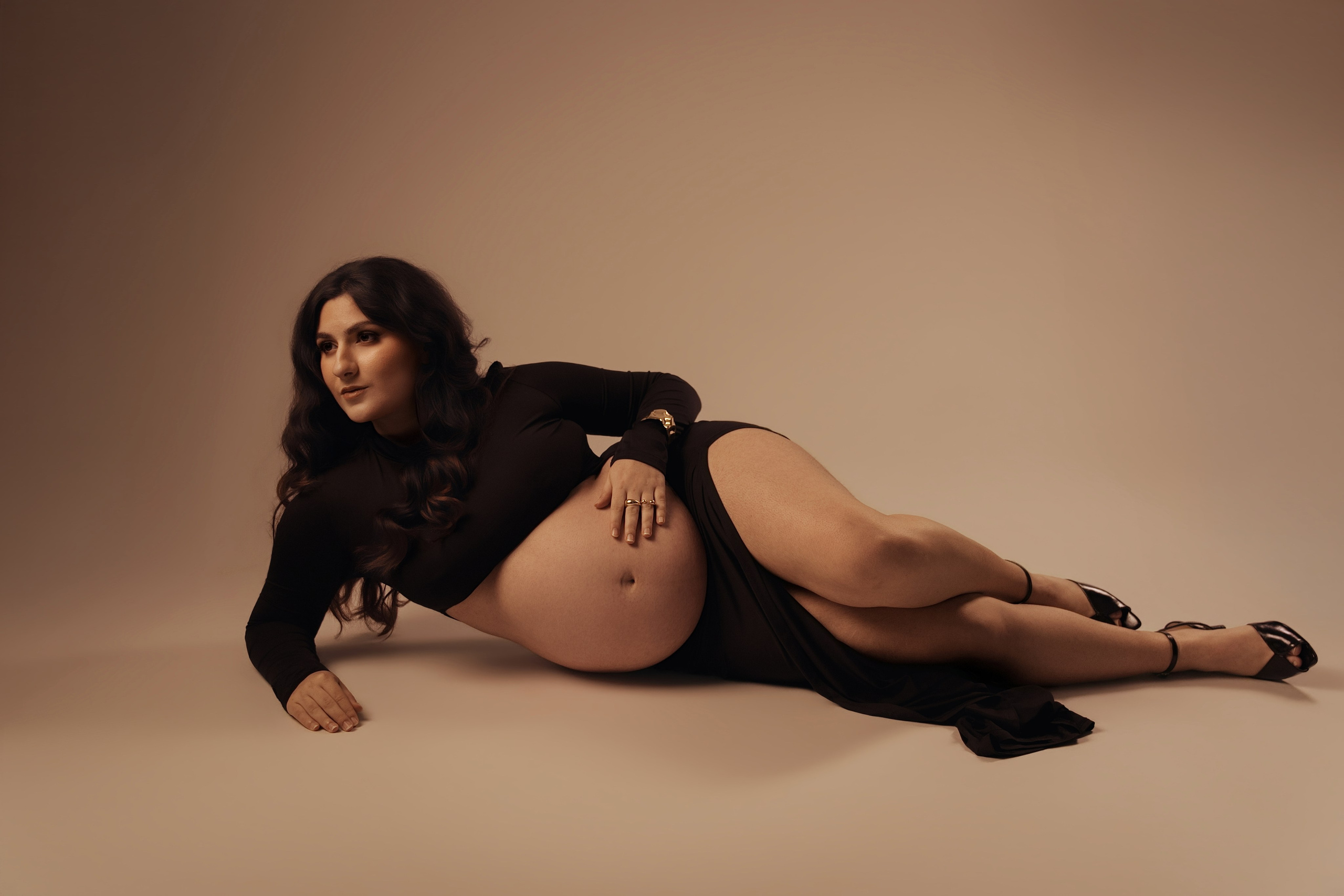
A cinematic portrait uses directional light. The light comes from a deliberate direction, falls off across the body and face, leaves shadow that sculpts. Result: a person in a scene. The same face, photographed flat versus sculpted, reads as two different people.
In studio, this is usually a single strobe or single continuous light, modified by softbox or umbrella, placed at a specific angle relative to the subject. The 45-degree key light. The high overhead beauty light. The low storyteller. The hard side light with deep negative fill. Each lighting setup has a name in the cinematography books for a reason: each tells the scene a different way.
What I look for in light: where is the shadow? Light without shadow is light without information. Shadow is what gives the image dimension. Shadow is what tells the eye where to rest.
Color Tone as Signature
In film, the color grade is the silent author. Three different films can shoot the same scene with the same actors. The grade tells you which film you are watching.
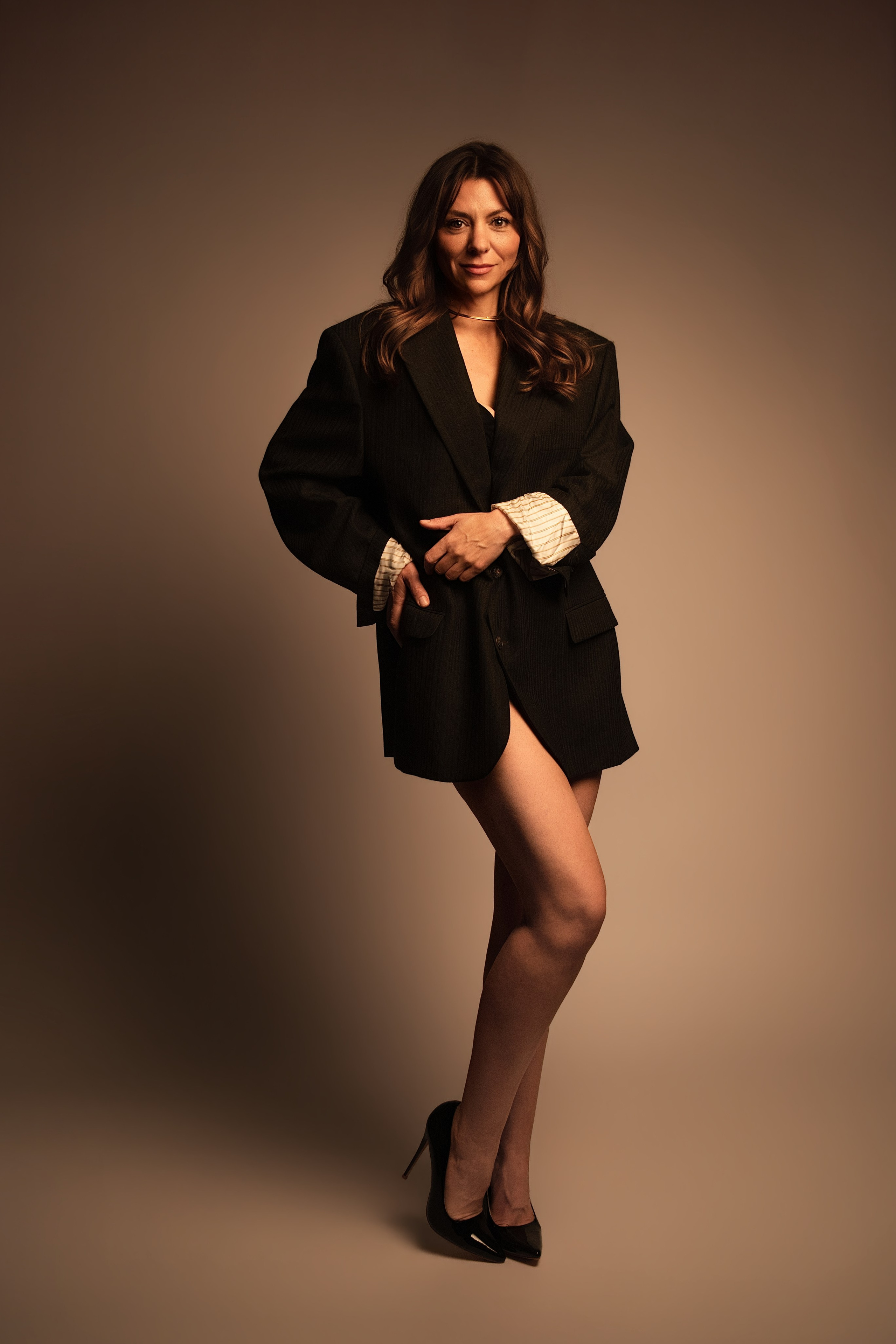
In a portrait, the color tone does the same work. Warm sepia and muted gold reads as one kind of scene. Cool blue and cyan reads as another. Saturated and neutral and cinematic-orange-teal each carry meaning before the viewer even registers the subject.
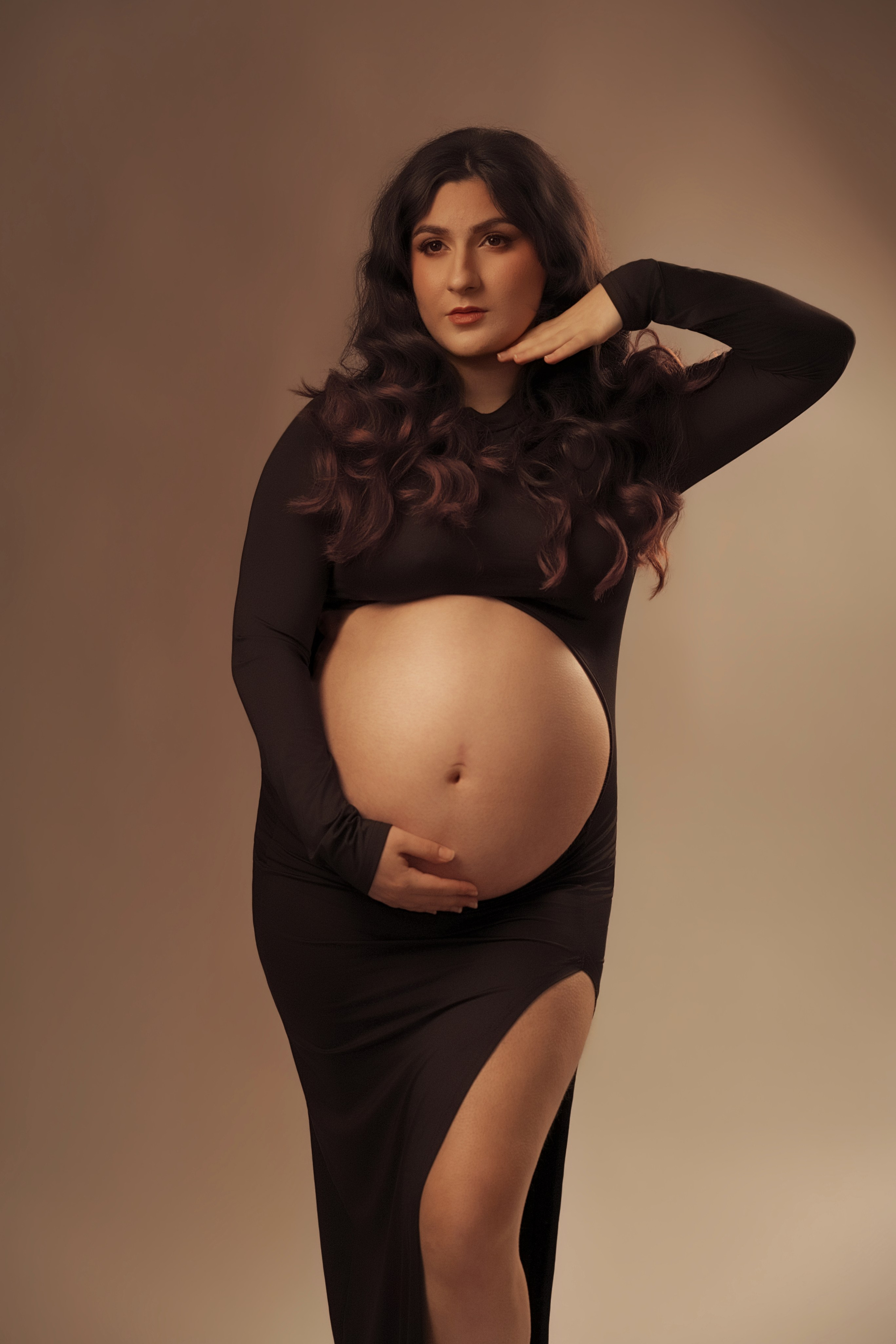
My signature tone is warm. Not orange-warm, not saturated, not Instagram-vivid. A specific kind of warm: low-saturated, slightly desaturated browns, skin tones that lean cream rather than peach, shadows that hold information rather than crush to black. This warm tone has come with me from the films I edited where the grade was always pushed toward late-afternoon light, regardless of when the scene was actually shot.
I apply this tone consistently across all my studio work. The result is that a maternity portrait and a personal portrait and a couples session, when seen next to each other in my gallery or on Instagram, feel like they belong to the same body of work. The grade is the signature.
Posing as Line of Action
In cinematography, every actor moves with intention. Even when they are still, their body is positioned in a way that suggests where they have just been or where they are about to go. Static posing reads as stiff. Posing with implied motion reads as alive.
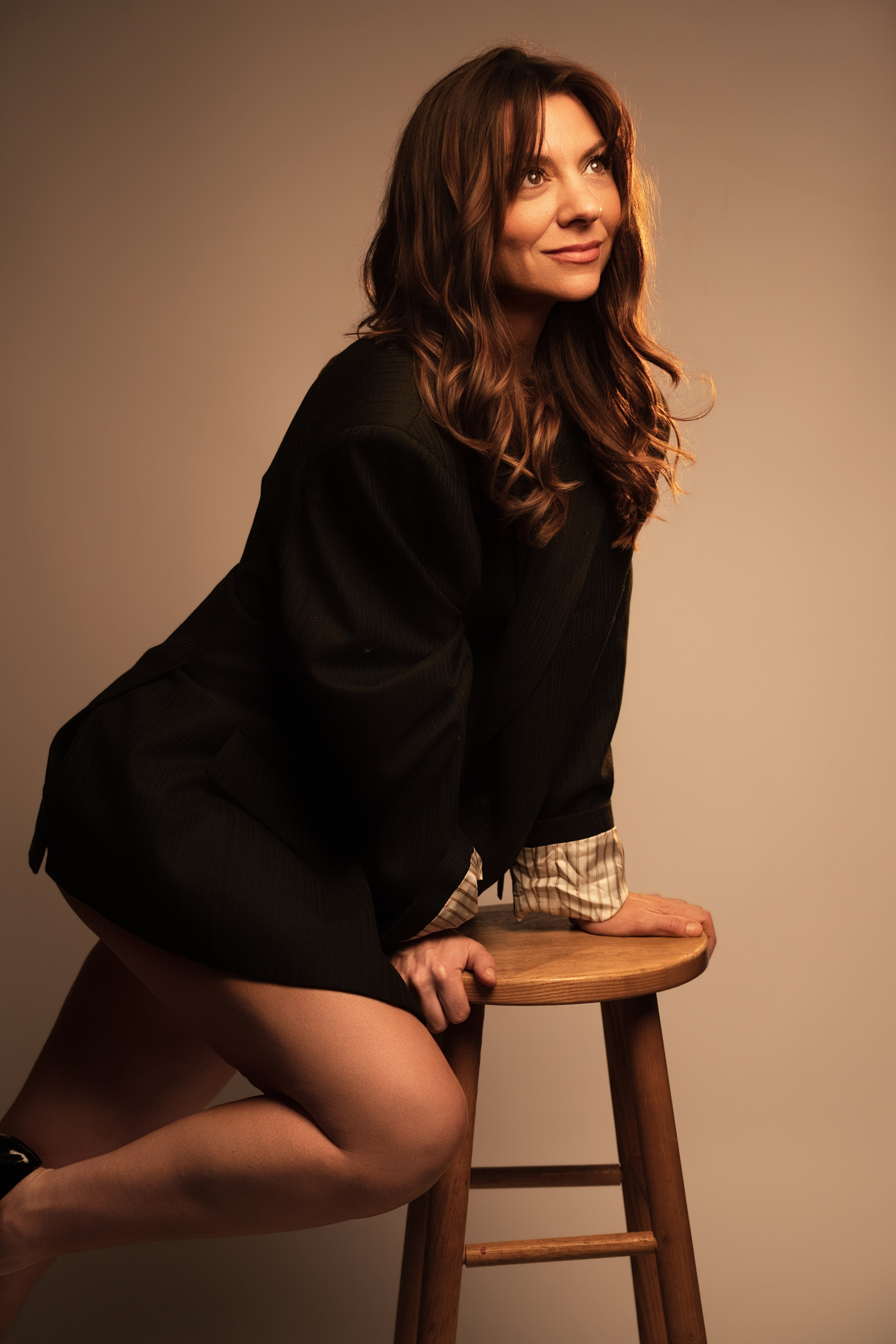
When I direct a portrait, I do not ask the subject to “look thoughtful” or “smile.” I give her a small action to do. Slowly lift your hand to your hair, but stop halfway. Look at the corner of the room, then back to me, then hold. Turn your shoulder toward the camera as if you have just been called by someone behind you.
The portraits that result feel like film stills. They look like the subject was caught between two actions, in a moment that suggests narrative on either side of the frame.
This is what I think people mean when they say a portrait “looks like the woman is thinking about something.” She is. I directed her to be in motion or about to be in motion. Her body language reflects intention. The image carries weight.
Composition With Breathing Space
A snapshot fills the frame with subject. The face is centered. The body extends to the edges of the frame. No room for the eye to wander.
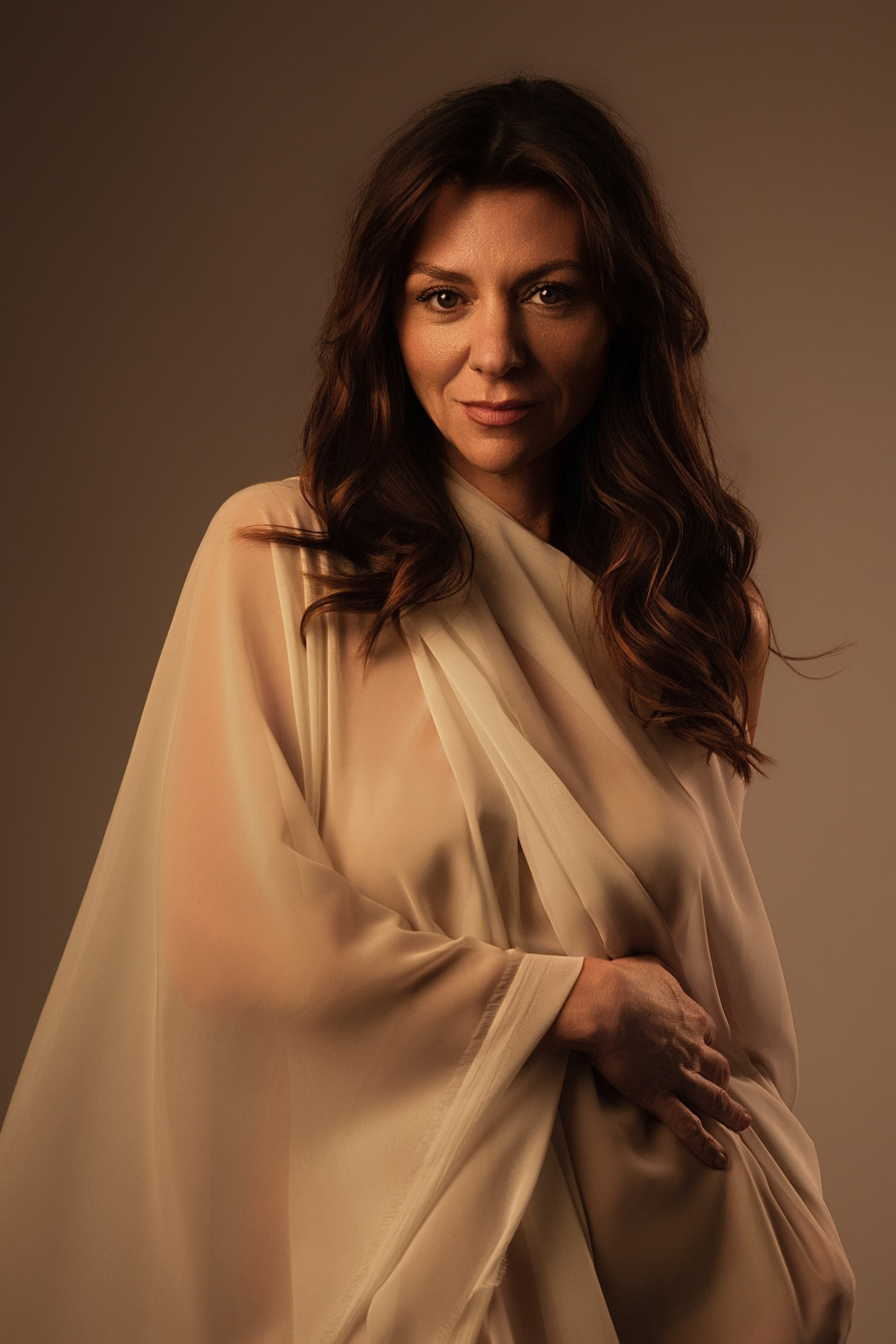
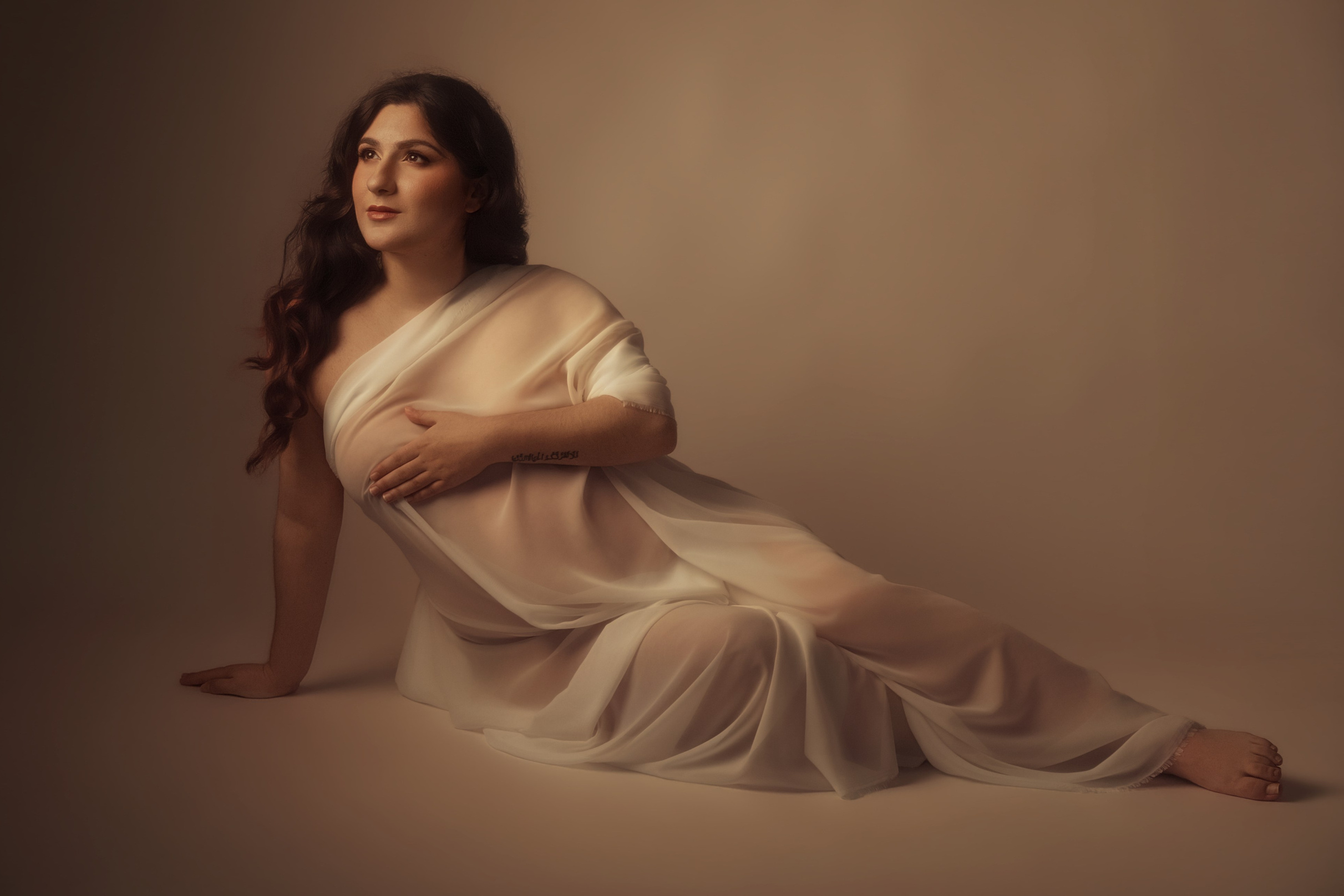
A cinematic portrait gives the subject breathing space. The figure occupies maybe 40 to 60 percent of the vertical frame. Above her, around her, behind her, there is room. Atmosphere. Negative space.
In film, this is how a director sets a character in a scene. The empty room around her tells you about her. The composition signals: this person exists in a place, in a moment, in a context. The single-frame portrait should do the same.
In my studio sessions, I shoot many full-length and three-quarter compositions where the subject is small in the frame. Some clients are surprised by this at first. They expected close-ups of their face. But the wider, more atmospheric shots are often the ones they print as wall art. The composition makes the image feel like art, not documentation.
Atmosphere
The hardest element to name and the most important. Atmosphere is the feeling that the scene is happening. That something is in the air. That the viewer has been allowed to see a moment that was not staged for them.
How do you build atmosphere? It is everything else combined. Light that sculpts, color that consistently tones, posing that suggests narrative, composition that breathes. When all four are aligned, atmosphere happens on its own. When any one is off, the atmosphere dissolves and you are left with documentation.
This is why I shoot in studio. Outdoor sessions are beautiful, but they require the photographer to take what the environment gives. Studio sessions let me build the scene. Every element under my control. Every choice deliberate. The atmosphere is intentional, not lucky.
What This Means for a Session With Me
When you book a portrait session at the Hartford or Stonington studio I work in, you are not booking a photoshoot in the documentary sense. You are stepping into a scene I will design with you.
Before the session: I learn what you want the images to feel like. Not just what you want to wear, but what mood you want them to carry. We pick a visual direction together.
On session day: I set the light first, before anything else. I show you exactly how to stand, where to look, when to breathe. I do not photograph until the scene is constructed. Then we shoot.
After: I grade every image consistently. The signature warm tone runs across all of them. The variations between images are in light, pose, and composition, not in tonal inconsistency. The result is a gallery that reads as one body of work, not 20 unrelated photos.
This is what cinematic means in single-frame work. Not “dramatic” or “moody” by default. Considered. Constructed. Layered.
If you are planning a portrait session in Connecticut and want the kind of images that feel like film stills, the full session experience lives here
For wardrobe planning that fits this aesthetic direction, the Maternity Wardrobe Guide goes into fabric, color, and silhouette for studio sessions
Editorial Maternity & Motherhood Notes
